Late-Fall Fertilization for Brooklyn Park Cool-Season Turf
November in Brooklyn Park doesn't feel like prime time for lawn care, but it's actually the most critical feeding window of the entire year for cool-season turf. Kentucky bluegrass, fine fescue, and perennial ryegrass — the grass types that dominate lawns across Brooklyn Park and the broader north metro — store carbohydrates in their root systems before the ground freezes. A well-timed winterizer fertilizer application replenishes those reserves, giving the turf what it needs to survive Minnesota's deep freeze and green up fast in the spring. Skipping this feeding is one of the most common and costly mistakes homeowners make in zone 4b lawn care.
What a Winterizer Fertilizer Actually Does for Cool-Season Turf
The term "winterizer" gets used loosely, but the science behind it is straightforward. After the last mowing of the season, cool-season grass blades stop growing while the roots remain active for several more weeks. During this window, grass plants pull nutrients from the soil and convert them into stored sugars and starches. These reserves fuel the first burst of spring growth before soil temperatures warm enough for active nutrient uptake to resume.
A winterizer fertilizer is typically high in nitrogen but formulated with a meaningful portion of slow-release nitrogen to avoid pushing blade growth at the wrong time. The nitrogen applied in late fall doesn't cause a flush of leafy growth — the plant is past that stage. Instead, it feeds root development and carbohydrate accumulation. The distinction matters. An early fall feeding grows grass. A late fall feeding strengthens roots and sets the turf up for winter survival and spring recovery.
Timing the Application in Brooklyn Park Conditions
In Brooklyn Park, the ideal late-fall fertilization window typically falls between late October and mid-November. The target is after the final mowing but before the ground freezes hard. Soil temperature is the real guide — you're aiming for soil temps that have dropped below 50°F at the surface but have not yet hit freezing consistently. At this range, grass blades have largely stopped growing but root activity continues.
Applying too early — say, early October — risks stimulating foliar growth that becomes susceptible to early frost damage. Applying after a hard freeze wastes product and loses the window for root uptake entirely. Brooklyn Park sits firmly in zone 4b, and the variability of Minnesota autumns means some years the window is long and forgiving, and others it closes quickly after a string of hard nights in late October. Watching the 10-day forecast and the local conditions around Hennepin County is more reliable than picking a calendar date. For how this feeding sits against the rest of the year, see how often to fertilize a cool-season lawn in Brooklyn Park.
Choosing the Right Product for Minnesota Lawns
For lawn fertilization in zone 4b, the winterizer product you choose matters as much as the timing. Look for a fertilizer with a higher nitrogen number and a lower phosphorus number. Minnesota's phosphorus restrictions mean you generally cannot apply phosphorus to established lawns unless a soil test confirms a deficiency — a rule that applies across the Twin Cities metro including Brooklyn Park.
The nitrogen ratio should include a blend of fast and slow-release sources. The fast-release fraction feeds root uptake during the remaining weeks of soil activity. The slow-release portion becomes available as soils warm in spring, giving the turf a head start before the first scheduled spring feeding. Avoid products marketed purely as quick-release during this application window — you're not trying to produce blade growth, you're building reserves.
Potassium is worth including as well. Potassium strengthens cell walls and plays a role in the turf's ability to manage cold stress. A 24-0-12 or similar ratio is a common recommendation for late-fall applications on Minnesota cool-season lawns.
Application Rate and Spreader Technique
Most winterizer products recommend between 0.75 and 1 pound of actual nitrogen per 1,000 square feet for the late-fall feeding. Over-application doesn't increase the benefit and can lead to salt stress on already-stressed turf. Calibrate your spreader before you start — this is especially important if you're switching from a product you used earlier in the season.
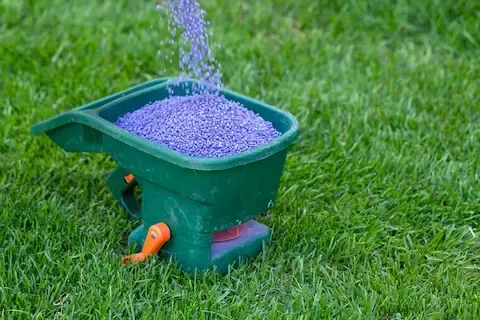
Apply granules when the grass is dry to avoid clumping and ensure even distribution. If there's light frost on the blades in the early morning, wait until it burns off before spreading. Walk at a consistent pace and overlap your passes slightly at the edges to avoid streaking. After application, water the lawn lightly if no rain or snowfall is expected within 24 to 48 hours. Granules need moisture to begin dissolving and moving into the root zone.
In Brooklyn Park neighborhoods near park systems and stormwater retention areas, take care near property edges. Keeping fertilizer off hard surfaces like driveways and sidewalks prevents runoff into storm drains — a straightforward practice that aligns with Hennepin County water quality guidelines.
What Happens to Turf That Misses the Late-Fall Feeding
Lawns that skip the winterizer application often show it the following May. The turf greens up slowly, comes in thin or uneven, and may show patches where cold-stressed grass struggled to recover from winter dormancy. In severe winters — the kind Brooklyn Park sees every few years with extended subzero stretches — poorly-fed turf is more prone to winter desiccation and crown damage.
Root reserves also affect the turf's ability to resist early spring weeds. A dense, vigorous lawn coming out of winter crowds out opportunistic weed germination. A thin, nutrient-depleted lawn hands that competition advantage directly to crabgrass and broadleaf weeds, which means more corrective work in spring.
If you want to understand how the late-fall feeding fits into the full-season picture, our lawn fertilization plan zone 4b guide walks through each feeding window from early spring through this final November application and explains how they work together.
Making the Most of Your November Window
Late-fall fertilization is a short window with a long payoff. For Brooklyn Park cool-season turf, it's the application that separates lawns that come back strong in April from lawns that require extra remediation and repair. The investment of one properly timed winterizer feeding — the right product, the right rate, applied before the ground locks up — pays dividends through the entire following season. If there's one feeding you don't skip in Minnesota, this is the one.
