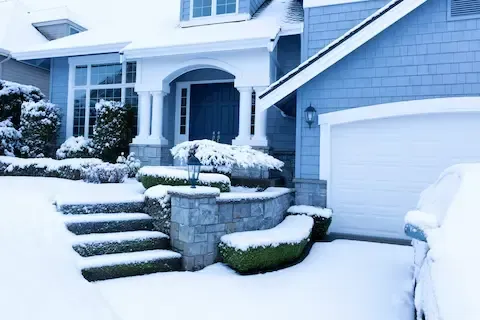
Brooklyn Park Sidewalk and Driveway Clearing Playbook
Snow in Brooklyn Park doesn't wait for a convenient moment. It lands overnight, packs down by morning commute, and turns your front walk into a liability before you've had your first cup of coffee. Whether you're managing a single-family driveway on a quiet cul-de-sac or keeping a corner lot sidewalk clear for foot traffic, having a repeatable system makes the difference between a stressful winter and one you barely notice. This guide walks through the full clearing playbook — tools, timing, deicer selection, and the city rules you need to stay compliant.
Understanding Brooklyn Park's 48-Hour Sidewalk Ordinance
Brooklyn Park, like most Hennepin County municipalities, enforces a sidewalk clearing requirement for property owners. After a snowfall ends, you have 48 hours to clear the adjacent public sidewalk to bare pavement. That clock runs from the time the snow stops falling, not from when you wake up and notice it.
This ordinance matters for a few practical reasons. First, the city conducts periodic compliance checks, particularly after significant storms. Second, if someone slips on an uncleared sidewalk adjacent to your property, your liability exposure is significant. Third, Brooklyn Park's network of trails, sidewalks, and pedestrian crossings serves a dense residential population — walkers, school kids, and cyclists depend on cleared paths from Oak Grove Parkway down through the neighborhoods bordering Shingle Creek.
What counts as "cleared"? The standard is bare pavement, not just a trampled path. A single shovel-width track doesn't satisfy the ordinance. You need edge-to-edge clearing across the full width of the sidewalk panel. If ice has bonded to the surface, a deicer application is expected to follow mechanical removal.
Tools That Actually Move Minnesota Snow
Minnesota winters test equipment hard. The snow here ranges from light powder that practically blows away to dense, wet cement-like slabs that can weigh forty pounds per cubic foot. Your tool selection needs to handle both extremes.
Shovels
A quality ergonomic shovel with a curved handle reduces back strain during long clearing sessions. For heavy wet snow, a pusher-style blade with a poly edge is easier on pavement and lets you move large volumes without lifting. Keep a separate flat-blade shovel for scraping the last quarter-inch off concrete or asphalt after the bulk has been thrown. Dull edges leave packed residue that bonds overnight into a sheet of ice — the exact condition that makes deicers work harder and longer.
Snow Blowers
Single-stage electric or gas blowers work well for sidewalks and lighter accumulations up to six inches. For Brooklyn Park driveways — especially two-car or three-car driveways common in neighborhoods like Edinburgh and the areas off West Broadway — a two-stage gas blower is worth the investment. Two-stage machines handle depth, wet snow, and gravel driveways without the auger-to-ground contact that accelerates wear on single-stage units. Discharge direction matters: aim away from neighboring driveways, parked vehicles, and the street. Read our driveway snow pile placement guide before your first big storm to make sure cleared snow ends up where it won't cause problems later in the season.
Ice Scrapers and Push Brooms
A steel-edge ice scraper on a long handle is the most underrated tool in a winter kit. After mechanical clearing, a scraper strips bonded ice and compacted snow that a shovel or blower leaves behind. A stiff push broom clears residual slush before it refreezes. These two tools cost under thirty dollars combined and prevent more callbacks and re-clearing sessions than any single upgrade.
Deicer Selection for Brooklyn Park Conditions
Choosing the right deicer is more complicated than grabbing the cheapest bag at the hardware store. Different products work at different temperatures, cause different levels of damage to concrete and vegetation, and carry different environmental implications for storm drains that feed into Shingle Creek and nearby wetlands.
Rock Salt (Sodium Chloride)
Rock salt is effective down to about 15°F and remains the most common deicer in residential use. It's inexpensive and widely available at stores throughout Brooklyn Park. The downsides are significant: it damages concrete over time, kills grass and vegetation in overapplication zones, and contributes chloride loading to local waterways. Use it conservatively and avoid sweeping excess into storm drains.
Calcium Chloride
Calcium chloride works down to -25°F, making it the go-to product for the coldest stretches of a Minnesota January. It generates heat on contact, which accelerates melting. It's more expensive than rock salt, but a smaller volume goes further. It can still harm vegetation and pets' paws — rinse pet paws after walks and keep granules away from planted areas.
Magnesium Chloride
A middle-ground option: effective to around -13°F, less damaging to concrete than sodium chloride, and somewhat less harmful to vegetation. It works well as a pre-treatment applied before a storm begins, reducing bond between snow and pavement so mechanical clearing is faster and more complete.
Sand and Traction Agents
Sand doesn't melt ice — it provides traction. On steep driveways or icy front steps, a layer of sand buys safety without the chemical drawbacks. It needs to be swept up in spring to prevent it from clogging storm drains. Some Brooklyn Park homeowners blend a small amount of sand with calcium chloride for a combined melt-and-grip approach on problem areas.
Pet-Safe and Concrete-Safe Formulas
If you have pets or a relatively new concrete driveway — concrete poured within the last few years is more porous and vulnerable to freeze-thaw spalling from chloride exposure — look for urea-based or potassium acetate products. They're less effective at extreme temperatures and more expensive, but they protect surfaces and animals. Use these selectively on steps and entryways where pet contact is highest.
A Storm-by-Storm Clearing Sequence
Reactive clearing — waiting until a storm ends to start working — is more physically demanding and time-consuming than a phased approach. Here's a sequence that keeps ahead of accumulation without requiring you to be outside continuously.
Before the storm: Apply a thin layer of liquid deicer or spread a light application of magnesium chloride pellets on sidewalks, steps, and the apron at the base of the driveway where plows push road snow. Pre-treatment prevents initial bonding and reduces total clearing time by 30 to 40 percent.
During a long storm: If snow is falling at two inches per hour or more, clear once mid-storm if safe to do so. Moving six inches twice is much easier than moving twelve inches once. Pay attention to temperature and wind — clearing during a blizzard with gusts off Bass Lake Road is dangerous and the effort may be undone within an hour.
Immediately after: Clear the full width of the sidewalk and the full length of the driveway. Throw or blow snow to designated pile areas. Scrape residual packed snow to bare surface. Apply deicer if temperatures are below 20°F and residual ice remains.
Within two to three hours of clearing: Inspect. Melt water from the deicer and warming conditions can refreeze as temperatures drop after sunset. A second application or a light scraping pass prevents a new ice sheet from forming.
Common Mistakes That Cost Time and Money
Most clearing problems come from a handful of repeated errors. Avoiding them saves you re-work and keeps your surfaces in better condition over the long haul.
Leaving a thin layer of packed snow: This is the most common setup for an ice problem. The packed residue acts as a base layer that bonds to any melt-refreeze cycle. Always scrape to bare pavement after bulk clearing.
Overapplying deicer: More is not more. Excess deicer doesn't melt faster — it runs off, damages pavement edges, kills adjacent turf in spring, and loads chlorides into storm drains. Follow label rate guidance and apply in a single pass.
Ignoring the apron at the street: The strip at the base of your driveway where it meets the road collects plow-push snow from every pass. This area freezes into a dense ridge that blocks vehicle egress and creates a pedestrian hazard. Budget time and deicer specifically for this zone after any city plow pass.
Starting with insufficient equipment: A broken shovel handle or an underpowered blower that jams on wet snow wastes time during the limited window between storm end and refreeze. Inspect and service equipment in October before the first storm.
When to Call a Professional
Some situations are better handled by a professional service than by working through them yourself. If you're managing multiple properties in Brooklyn Park, if a storm dumps more than twelve inches overnight, if a health issue limits your ability to shovel safely, or if you simply can't be on-site within the 48-hour ordinance window, a contracted service closes the gap.
Professional clearing services also bring commercial-grade equipment capable of handling wide driveways, long sidewalk runs, and heavy accumulations faster than residential equipment can. If you've had ice dam or drainage problems in previous winters, a professional assessment of your grading and clearing approach can identify where water is pooling and refreezing on your property — a common issue in flatter sections of Brooklyn Park north of Highway 610.
For residential and commercial properties that need reliable, ordinance-compliant clearing throughout the winter, Sidewalk & Driveway Clearing services provide scheduled visits timed to storm events so you're never watching the 48-hour clock run out.
Keeping Your Surfaces in Good Shape Long-Term
A good clearing routine protects your driveway and sidewalk from cumulative winter damage. Concrete and asphalt both suffer from freeze-thaw cycling, especially when water penetrates surface cracks and expands. Keeping surfaces clear of packed snow and ice reduces the amount of standing melt water available to infiltrate cracks. Choosing low-chloride deicers on new or porous concrete extends the surface life significantly.
At the end of the season, sweep away sand residue, rinse deicer residue from concrete, and inspect the surface for cracks that need sealing before next winter. Spring sealing is far cheaper than resurfacing a driveway that's been left unchecked through several harsh Minnesota winters.
Brooklyn Park winters are long and variable — light and manageable in some years, relentless in others. A consistent playbook, the right equipment, and the 48-hour ordinance front of mind gets you through both without surprises.
