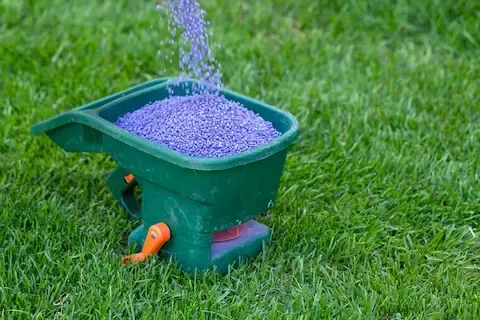
Soil Testing First in Brooklyn Park Clay Lawn Feeding
Most Brooklyn Park homeowners buy a bag of fertilizer based on whatever is on sale at the hardware store, spread it in spring, and wonder why their lawn still struggles by August. The missing step is almost always a soil test—a simple, inexpensive analysis that tells you exactly what your soil has, what it lacks, and what pH range it is operating in. Without that data, you are guessing. And in Brooklyn Park, where heavy clay soils are the norm across much of Hennepin County, guessing tends to be expensive and counterproductive.
Why Brooklyn Park Clay Soil Complicates Lawn Feeding
The soils across much of Brooklyn Park and the surrounding Hennepin County communities are dominated by glacially deposited clay. This is not uniform across every property, but it is common enough that you cannot assume your lawn behaves like the average lawn in a national fertilizer guide. Clay soils have properties that change how nutrients behave in meaningful ways.
First, clay holds nutrients tightly. Phosphorus in particular bonds to clay particles and becomes unavailable to grass roots even when the total amount in the soil looks adequate on paper. Second, clay compacts easily, which restricts root depth and limits the zone where fertilizer can even reach active roots. Third, clay soils in this region tend to have a higher pH than grass prefers, often sitting in the 7.0 to 7.8 range due to parent material and decades of irrigation with hard municipal water. High pH locks out micronutrients like iron and manganese, causing that persistent yellowing that does not respond to standard nitrogen applications.
If you are applying a standard three- or four-step fertilizer program without first knowing your soil's pH, organic matter content, and base nutrient levels, there is a real chance you are adding products that either cannot be used by the grass or are already present in excess. Both scenarios waste money and can cause long-term damage to soil biology.
How to Collect a Proper Soil Sample in Brooklyn Park
The accuracy of any soil test depends entirely on the quality of the sample you submit. A single core from the edge of your driveway will not represent the growing conditions across your entire lawn. Here is how to do it correctly.
Use a clean stainless steel probe, trowel, or garden spade. Avoid galvanized tools because zinc can contaminate the sample.
Collect 10 to 15 individual cores from random locations across the lawn, avoiding unusual spots like drainage low points, areas near concrete, or spots with visible dead patches.
Each core should go 4 inches deep, which is the primary root zone for Kentucky bluegrass and fine fescues—the dominant species in most Brooklyn Park lawns.
Combine all cores in a clean plastic bucket, mix thoroughly, and then remove roughly one cup of the blended sample.
Allow the sample to air dry at room temperature before packaging. Wet samples can produce inaccurate readings or be rejected by labs.
The University of Minnesota Extension soil testing lab in St. Paul is the most practical option for Hennepin County residents. Their reports are calibrated to Minnesota soil types, which matters because national lab recommendations are often based on soil conditions in other regions. You can also find the submission forms and current pricing on the U of M Extension website. Basic tests typically run between $17 and $25 and return results within a week or two.
Reading Your Soil Test Report Before Buying Anything
When your results arrive, the most important numbers to focus on are pH, phosphorus, potassium, and organic matter percentage. Each one tells you something specific about what your lawn actually needs.
pH is the single most important factor. At the correct pH range—roughly 6.0 to 7.0 for turf grasses—nutrients become available and grass can take them up efficiently. If your Brooklyn Park soil is testing above 7.2, adding more nitrogen will produce limited results because the plant cannot efficiently process it. Correcting pH with sulfur applications, when needed, should happen before any fertilizer program begins.
Phosphorus is frequently high in Minnesota lawns that have been fertilized for years. Many starter fertilizers and general-purpose blends contain phosphorus even when the soil does not need it. Minnesota state law actually restricts phosphorus application on established lawns unless a soil test documents a deficiency—a regulation that Brooklyn Park residents are subject to. If your test shows adequate or high phosphorus, you need a zero-phosphorus maintenance fertilizer.
Potassium supports drought tolerance and disease resistance. Clay soils often have reasonable potassium levels, but if your lawn experiences summer stress consistently, a low potassium reading may explain part of the problem.
Organic matter below 3 percent indicates a soil that will struggle to retain moisture, support microbial life, or release nutrients steadily. This is common in newer developments around Brooklyn Park where topsoil was stripped during construction. If your organic matter is low, topdressing with compost will deliver more long-term value than almost any fertilizer application.
What Soil Test Results Mean for Your Fertilization Timing
Once you know your soil's baseline, you can align your lawn fertilization program to what the grass actually needs rather than what the bag calendar recommends. In Brooklyn Park's Zone 4b climate, the most important feeding windows are late spring after soils have warmed past 55 degrees and fall between mid-August and mid-October.
If your pH is elevated, the priority in early spring is a sulfur application to begin moving pH downward before the main growing season. Nitrogen applied to high-pH clay simply will not produce the green-up response you expect. If phosphorus is adequate, you skip any product containing it. If potassium is low, you choose a fertilizer with a higher third number on the analysis label. Once pH is moving in the right direction, our guide to spring green-up feeding for Brooklyn Park clay yards covers what to put down on the first pass and when soil temperature says to start.
This sounds like more work than grabbing whatever is on the shelf, but in practice it means fewer applications, less wasted product, and a lawn that actually responds. Many Brooklyn Park homeowners test once every three years and adjust their program based on whether pH is trending toward target and whether organic matter is building over time.
Connecting Soil Data to a Full-Season Plan
A soil test is the foundation, but it needs to connect to a structured feeding schedule that accounts for Brooklyn Park's specific growing season, cool-season grass behavior, and the timing windows that produce results in clay-heavy soil. For a detailed breakdown of how to sequence applications through the full calendar year, review our lawn fertilization plan zone 4b guide, which covers the specific timing windows, product formulations, and application rates suited to this climate.
The investment in a soil test—typically under $25—is the single highest-return action you can take before spending anything on lawn inputs. It removes the guesswork that causes most Brooklyn Park lawn feeding programs to underperform and gives you a clear, defensible starting point for every product decision you make from that point forward.
