Fall Overseeding Window for Brooklyn Park Clay Lawns
Brooklyn Park's clay-heavy soils create a narrow overseeding window that most homeowners either miss entirely or get wrong by a matter of weeks. The good news is that the September timing zone — roughly the first week through the third week of that month — gives cool-season grasses exactly what they need: warm soil from summer's heat, cooler air temperatures that reduce stress on new seedlings, and enough weeks before hard frost to push meaningful root development. Miss that window and you're either fighting summer heat in late August or gambling on germination that frost shuts down before seedlings can establish.
Why Clay Soil Changes the Overseeding Equation
Standard overseeding advice assumes loamy or sandy soil with reasonable drainage and easy seed-to-soil contact. Brooklyn Park clay lawns don't work that way. Clay compacts under foot traffic and lawn equipment, forming a surface that sheds water and resists root penetration. When you broadcast seed over compacted clay without preparation, most of it sits on top of the surface, dries out between waterings, and fails to germinate at useful rates.
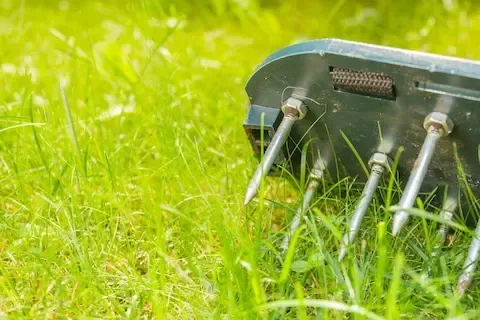
The solution isn't a different grass seed — it's mechanical disruption of the clay surface before you seed. Core aeration punches holes through the compacted layer, deposits plugs on the surface that break apart and mix back into the top layer, and creates channels where seed can drop in and stay moist. That soil-to-seed contact is the critical variable. Without it, you're broadcasting expensive seed onto what amounts to a hard, inhospitable surface.
For Brooklyn Park homeowners dealing with clay, this means the overseeding process always starts with aeration, not the seed bag. Check out our core aeration plan clay soil guide for specific timing and technique recommendations before you purchase seed or schedule any lawn work.
The September Timing Window Explained
Minnesota's first hard frost typically arrives somewhere between late September and mid-October depending on the year. Brooklyn Park, sitting in the northern Twin Cities metro, can see killing frosts as early as the last days of September in colder years. That frost date isn't the only constraint. New grass seedlings need a minimum of six to eight weeks of consistent growth after germination before they can survive winter dormancy without significant die-off.
Working backward from a late September frost risk, you need germination happening no later than the first week of September at the outside. Cool-season grasses like Kentucky bluegrass, fine fescue, and tulle-type perennial ryegrass germinate in seven to twenty-one days under optimal conditions. Ryegrass germinates fastest, often in seven to ten days when soil temperature stays above 50 degrees Fahrenheit. Bluegrass is slowest, taking closer to three weeks even in good conditions.
Soil temperature in Brooklyn Park clay lawns typically stays above 50 degrees through at least mid-September and often into early October. That means a seed-down date of late August through the first two weeks of September gives you the best probability of full germination with adequate time for root establishment before dormancy. Waiting until late September is a gamble. Waiting until October is almost always a loss. Aeration runs on its own calendar - when to aerate a lawn in Brooklyn Park gives the soil temperature triggers and frost dates that set your seeding date.
Seed Selection for Brooklyn Park Conditions
Not all grass seed performs equally in clay-heavy Minnesota lawns. Kentucky bluegrass is the dominant species in most established Brooklyn Park lawns and it's well-suited to the climate, but its slow germination makes it risky as a solo overseeding choice. A blend that includes ten to twenty percent perennial ryegrass gives you fast germination to anchor the seeding while the bluegrass fills in over time.
Fine fescues — creeping red, hard, and chewings varieties — work well in shadier sections of Brooklyn Park yards where tree canopy from mature maples and oaks reduces sun exposure. Fescues also tolerate clay's slower drainage better than some premium bluegrass varieties. If your lawn has shaded sections, a fescue-bluegrass blend addresses both conditions without requiring you to manage two separate seeding projects.
Avoid tall fescue for standard residential overseeding in this region. It's coarse-textured, clumps instead of blending with surrounding turf, and performs poorly in the freeze-thaw cycles that characterize Brooklyn Park winters.
Watering After Overseeding on Clay
Clay soil's drainage characteristics that make it frustrating for compaction become an advantage during germination. Clay holds moisture longer than sandy soils, which means less frequent irrigation may be needed to keep the seed zone moist. The risk runs the opposite direction — clay can stay saturated after heavy rain, and standing water on newly seeded areas will wash seed and drown germinating seedlings.
The practical watering approach for Brooklyn Park clay lawns after overseeding is light, frequent irrigation until germination, then transitioning to deeper, less frequent watering once seedlings reach an inch of height. Light watering means wetting the top half-inch of soil without saturating the clay layer underneath. In practice, that's often ten to fifteen minutes per zone in the morning, repeated daily until you see consistent germination. After that, shift to longer runs every two to three days to encourage roots to chase water deeper into the clay profile.
Common Mistakes in the Brooklyn Park Overseeding Timeline
The most common error is treating overseeding as a weekend task you can schedule whenever it's convenient. The September window doesn't adjust to your calendar — it's dictated by soil temperature, air temperature, and frost date. Pushing the seed-down date into late September because the summer stayed busy is the single most reliable way to waste seed and skip a year of lawn improvement.
The second common mistake is skipping aeration and overseeding directly into existing turf on clay soil. Seed that doesn't make it into the soil doesn't establish. Foot traffic, mowing, and watering will all dislodge surface seed before germination can anchor it. Clay's density makes this problem worse than it would be in looser soil types.
Mowing the existing lawn short before overseeding — down to two to two and a half inches — improves seed distribution and reduces competition from existing grass for light and moisture during the critical germination period. It's a small step that meaningfully improves outcomes on lawns where existing turf is thick.
Working with a Local Service for Fall Renovation
Timing, equipment, and seed selection all interact in ways that make fall lawn renovation more complex than it appears. If you're managing a Brooklyn Park property with significant clay compaction, thin turf, or past overseeding failures, professional aeration and overseeding eliminates the variables that cause DIY attempts to underperform. Equipment quality matters — commercial aerators penetrate compacted clay more effectively than rental units, and consistent plug spacing produces more uniform seed channels.
Scheduling early in August puts you ahead of the September rush when most homeowners realize the window is closing. Learn more about lawn aeration services available in the Brooklyn Park area and what a combined aeration-overseeding visit covers so you can plan timing that fits the actual September window rather than working around it.
