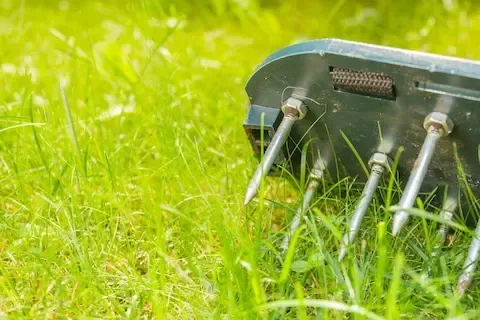
Overseeding Brooklyn Park Clay Lawns After Aeration
Brooklyn Park yards sit on some of the most stubborn clay soil in Hennepin County. That same dense, compacted ground that sheds water in July and heaves frost every spring also makes overseeding a gamble — unless you pair it with core aeration first. When you pull plugs from clay before you spread seed, you change the whole equation. Seed finds channels into loose soil, moisture retention improves without surface pooling, and new grass roots have room to actually establish before winter. Done in the right order and at the right time, overseeding after aeration is one of the highest-return lawn investments you can make on a Brooklyn Park property.
Why Clay Soil Makes Standard Overseeding Fail
Drop seed on untreated clay and most of it sits on the surface, dries out between rain events, and either never germinates or germinates weakly and dies before it roots. Clay particles pack tightly together, limiting the air pockets that young roots need. Water either puddles on top or runs off before it soaks down to the seed zone. Brooklyn Park neighborhoods like Willow Bend and Edinburgh see this pattern every fall when homeowners broadcast seed without any soil prep — thin, patchy results that disappoint by the following spring.
Compaction makes the problem worse over time. Foot traffic, heavy equipment, and repeated freeze-thaw cycles gradually squeeze the clay tighter. Grass already in the lawn thins out, bare spots expand, and crabgrass exploits every opening. Overseeding without addressing the underlying compaction just adds seed on top of a problem that will defeat the new grass the same way it defeated the old.
What Core Aeration Does for Clay Before You Seed
Core aeration pulls cylindrical plugs of soil — typically three to four inches deep — across the entire lawn surface. On clay ground, this creates immediate relief. The channels left behind break surface tension, let oxygen reach the root zone, and give water a direct path down rather than across. When you seed into those channels, the seed lands in a protected pocket of loosened soil with better moisture contact on all sides.
The pulled plugs themselves help too. As they break down over the following weeks, they introduce loosened clay back into the thatch layer, improving soil structure at the surface. For Brooklyn Park lawns that have been compacted for several seasons, a single aggressive aeration pass can be transformative. If compaction is severe, two passes in perpendicular directions increases the number of channels and gives overseeding an even better foundation. Read our core aeration plan clay soil guide for a detailed breakdown of how to approach heavily compacted yards before seeding season. Equipment matters more than technique here - why standard aerators fail on Brooklyn Park clay covers the tine length and machine weight this soil actually requires.
Seed Selection for Hennepin County Clay Lawns
Not all grass seed performs equally on clay soil. For Brooklyn Park and the surrounding Hennepin County area, Kentucky bluegrass remains the most common choice because it spreads through rhizomes and fills in bare spots over time. It handles Minnesota winters well and establishes a dense, competitive canopy that chokes out crabgrass when it reaches maturity.
That said, pure Kentucky bluegrass germinates slowly — often fourteen to twenty-one days — and it can struggle in shaded areas. A blend that incorporates a percentage of fine fescue gives you better performance in the shadier corners of a Brooklyn Park lot. Perennial ryegrass germinates much faster and can serve as a nurse grass, providing quick cover while bluegrass establishes. Look for blends specifically labeled for upper Midwest clay conditions, and avoid anything marketed primarily for shade or transition zone climates — those varieties underperform in Hennepin County's freeze-thaw cycle.
Timing the Overseeding Window in Brooklyn Park
Late summer to early fall is the optimal overseeding window for Brooklyn Park lawns — specifically late August through mid-September. Soil temperatures in the six-inch zone remain warm enough for germination, typically above fifty degrees Fahrenheit, while air temperatures start to moderate and reduce moisture stress on young seedlings. Cool nights also slow weed germination, giving your new grass a competitive head start.
Aerate first, then seed within twenty-four to forty-eight hours. The channels are most open and receptive immediately after aeration. Waiting longer allows the edges to begin drying and closing. After seeding, drag a lawn mat or use a light roller to press seed into contact with the soil in and around the aeration holes. Seed-to-soil contact is the single biggest factor in germination success on clay.
Spring overseeding is possible but carries more risk in Hennepin County. Crabgrass pressure is high in spring, and if you apply pre-emergent to control crabgrass, you will also suppress your new grass seed. Fall avoids that conflict entirely and gives new roots a full dormancy period to harden before summer heat arrives.
Watering Protocol After Overseeding Clay
Clay soil creates a watering paradox after overseeding. It holds water longer than sandy soil, which sounds helpful, but that same retention means it can stay wet enough at the surface to promote fungal issues while still being bone dry an inch below where you need moisture. The goal is consistent light moisture at the seed zone without saturating the surface.
Water lightly two to three times per day during the germination period, aiming for the top quarter inch of soil to remain consistently moist. Avoid heavy single-watering sessions that cause runoff or pooling on clay. Once seedlings reach about an inch tall, shift to deeper, less frequent watering — this trains roots to grow down rather than laterally along the surface. Brooklyn Park summers can be dry enough that newly seeded areas need supplemental watering well into October if fall rains are inconsistent.
Mowing and First-Season Management
Resist the urge to mow new grass too early. Wait until new seedlings reach three to three-and-a-half inches, then cut to no lower than two-and-a-half inches. Mowing too short on new clay-seeded lawns stresses young roots and can pull seedlings entirely out of the loose soil around aeration channels. Keep mower blades sharp — dull blades tear rather than cut, which damages seedlings and introduces disease pressure.
Do not apply broadleaf herbicide to a newly seeded lawn during the first season. Wait until new grass has been mowed at least three times before any chemical applications. Fertilize with a starter fertilizer at seeding time, focusing on phosphorus to support root development, then follow with a balanced fall feeding once the lawn has established.
Getting Professional Results on Brooklyn Park Clay
The combination of core aeration and overseeding done correctly on Hennepin County clay takes equipment, timing, and consistency that is difficult to replicate with rental gear and a single afternoon. Professional-grade aerators pull deeper plugs with more uniform spacing, and experienced crews can read soil conditions and seed at the right rates for your specific lawn density and bare-spot coverage. If you are dealing with heavy compaction, significant bare patches, or a lawn that has thinned consistently despite past overseeding attempts, professional lawn aeration paired with overseeding is worth the investment for the step-change improvement it delivers.
Brooklyn Park clay yards can support thick, competitive grass. The soil just needs to be worked before the seed goes down. Aerate, seed, water consistently, and manage the first season with patience — you will see a measurably denser lawn by the following spring.
